

Robot surgery in space – done from earth
How telerobotic surgery has steadily gone from science fiction to science fact


Only a few weeks ago, the vision of telerobotic surgery made another leap: this time into space. In a widely covered launch, the team at Virtual Incision sent the world’s first miniaturized surgical robot called spaceMIRA to the International Space Station (ISS) for testing long-range telesurgery. spaceMIRA will be used to explore telesurgery in zero gravity, an exciting advancement that foretells space missions beyond low Earth orbit.
This latest milestone continues a journey imagined in science fiction from the 1940s. Early attempts to build working systems began in the late 1960s. Then to make its way to the ISS, spaceMira advanced multiple features—conceptual, engineering, and breakthrough—of the telesurgery and surgical robot ecosystem. The MIRA technology was already an engineering achievement in robotic surgery solutions, weighing roughly 1,000 times lighter than other surgical robots and offering a portable, simple setup for use outside of a traditional medical operating room.
Most people don’t realize that the connection between space and telesurgery was already a core concept in the first-generation virtual reality (VR) work happening at the NASA Ames Research Center, led by Scott Fisher with Joe Rosen at Stanford University. This effort would eventually draw in many of the “big names” and seminal inventions during these early VR years, well chronicled here amid other sources. In this era, the focus on concept-into-technology—or science fiction to science fact—led to some lofty delusions from reporters then. [The media zeal also provoked one college student to imagine how immersive VR could upend hands-on engineering learning and the entire process of invention, but that’s a story for another newsletter!]
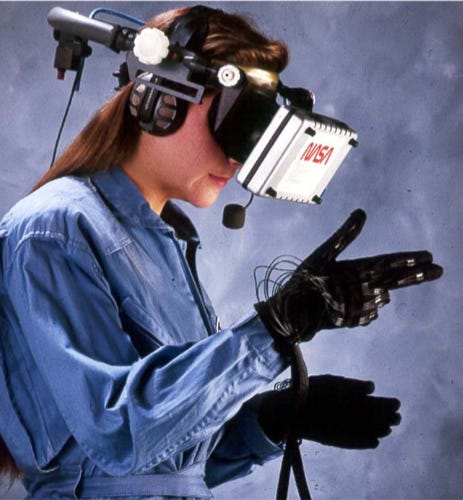
One crazy idea arrived from DARPA via a program manager who would serve a record three rotations at the Pentagon’s innovation agency (the common rule of tenure is “one and done”). Rick Satava invoked science fiction, funding DARPA’s dual-use Advanced Biomedical Training Program in the 1990s—which included a war zone evacuation system based on the trauma pod from the classic 1959 book Starship Troopers by Robert Heinlein. (As an aside, this book has sparked many thinkers and inventors as one writer notes.)
Satava’s program funded an SRI team, who worked first with Ames as they built and tested a nascent telesurgery platform. A team of entrepreneurs would come along years later to license their initial telesurgery platform—which in turn would become the foundation for Intuitive Surgical’s da Vinci Telesurgery System that ultimately set the standard of care for telerobotic surgery (and that we assume is the likely “other robots” mentioned as 1000x heavier than the MIRA!).
Another major stepping-stone included the invention of the RAVEN in the mid-2000s, an open-source surgical robot by researchers at the University of California, Santa Cruz. The RAVEN has been used in experiments—both technical and surgical—at numerous American universities and, one must assume, by the program sponsors in the US Army.
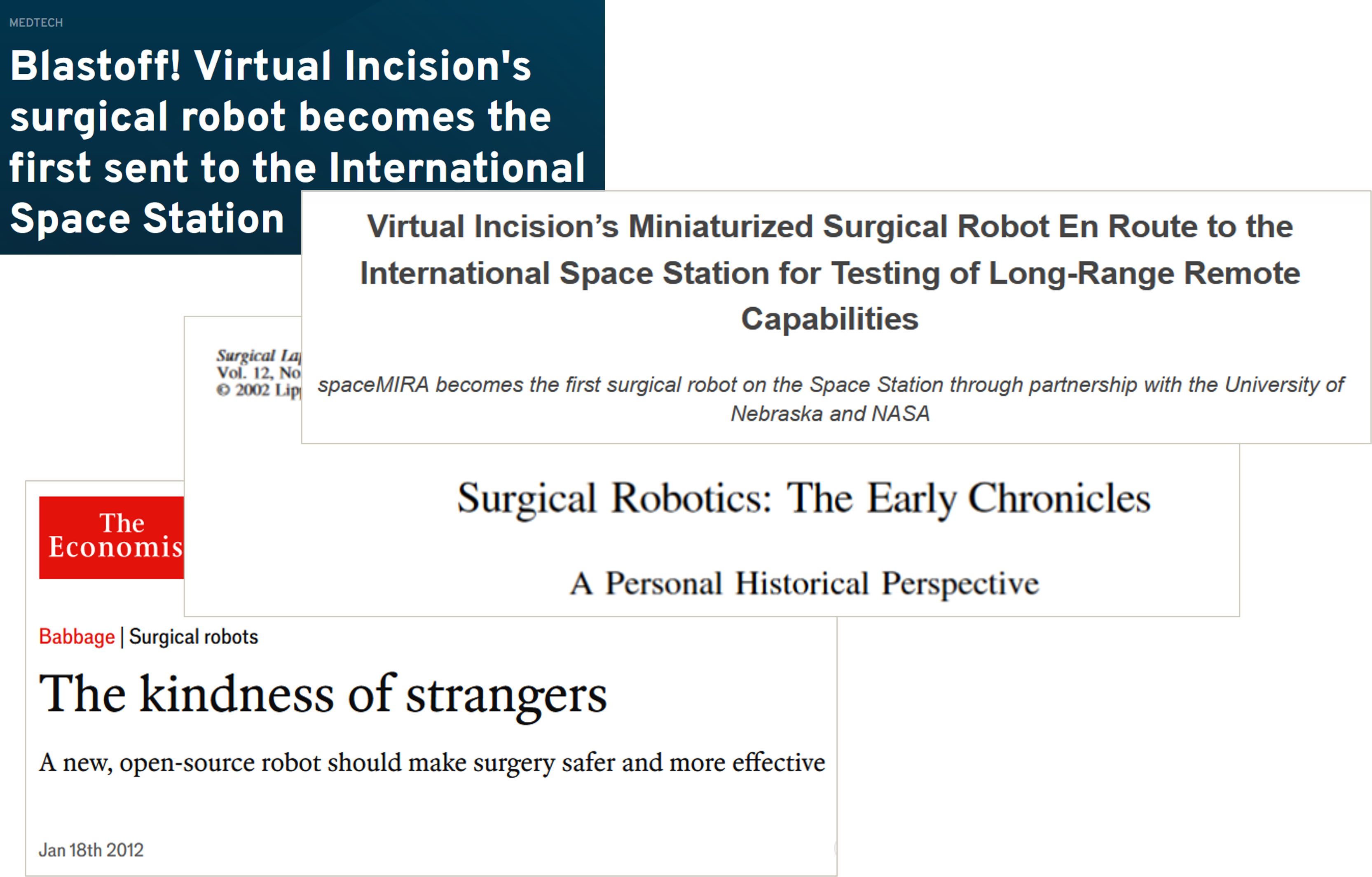
And on February 10, spaceMIRA completed its first surgery demo at ISS operated remotely by surgeons on earth—approximately 250 miles (400 kilometers) below in the Midwest US.
Overall, this news announcement of spaceMIRA is a fascinating step in a much longer and ambitious vision for operating medical robots remotely and safely from a distance. Moreover, this example brings to life at least three of the Moonshot Ways from the Building Moonshots book:
Way 9: Devour Hard Science Fiction
Way 23: Plan for Targets to Evolve
Way 54: Play a Continuous Game
We always love to hear from our readers, so send us an idea or request any time to hello@buildingmoonshots.com.
GET THE SOURCE
🚀Get your copy of Building Moonshots

Building Moonshots is your handbook for the almost impossible, describing over fifty ways for building big ideas with big impact. Financial Times describes this book as “easily digestible” with “practical insights for extraordinary entrepreneurship”.
SPECIAL BOOK BONUS
💫 Download your free poster of all 50+ Moonshot Ways
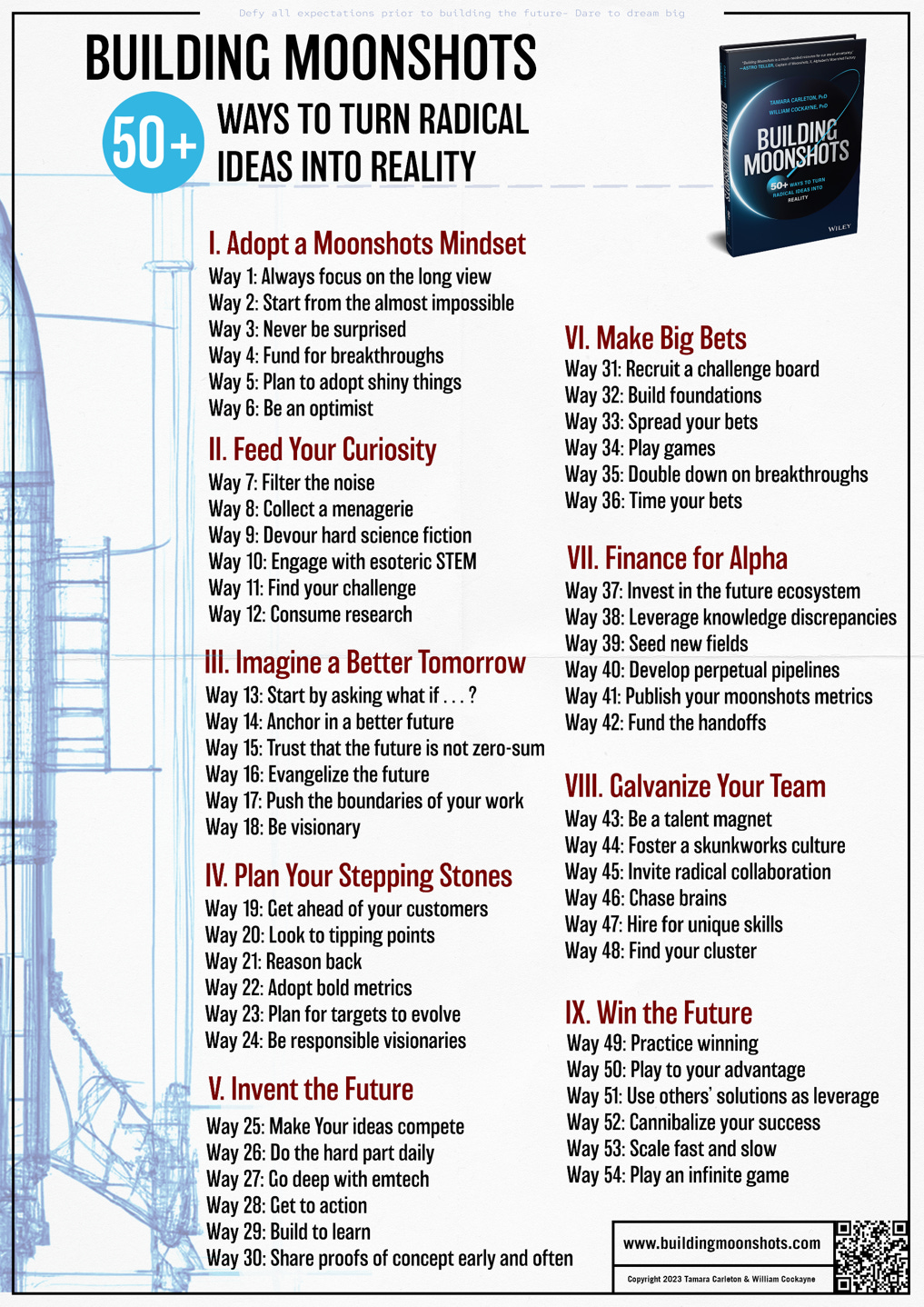
Download a free poster showing all 50+ Moonshot Ways that you can display as personal inspiration, team reminder, or cultural invective.
(print it big on US 11x17 or A3 sized paper)
OLDIE BUT GOODIE
📘Download your free copy of the seminal Foresight Playbook

If you haven’t yet, also download your free copy of the playbook that started it all: our Playbook for Strategic Foresight and Innovation. Developed from the first decade of courses, research, and insights from Stanford’s University Foresight program, and generously sponsored by the government of Finland’s innovation agency, these foresight tools and mindsets are easy to adopt, quick to apply, and used in thousands of the world’s leading innovation-seeking organizations. (Look for new playbooklets later in 2024!)